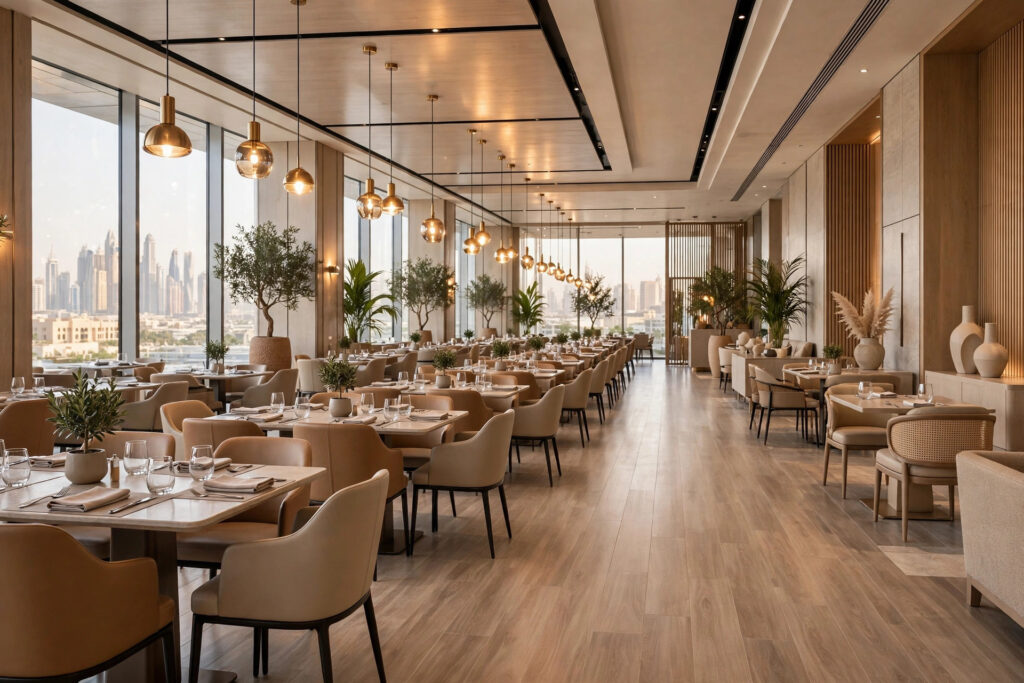
Short answer: For most restaurants in the UAE, commercial-grade SPC or vinyl flooring with a textured, slip-resistant surface is the most reliable choice. Dining areas need floors that handle constant foot traffic, spilled drinks, and chair legs scraping across them every day. Kitchens need fully waterproof, grease-resistant surfaces that can be deep cleaned daily and that hold up under municipality hygiene inspections. Get these two zones right and the rest of the venue becomes easy.
Why restaurant flooring in the UAE works harder than anywhere else
A restaurant floor in Abu Dhabi takes more punishment in a month than a home floor takes in a year. Breakfast, lunch, dinner, delivery riders coming and going, staff moving fast between kitchen and tables. That is hundreds of footfalls a day on the same surface, plus chairs being dragged and trolleys rolling.
Then add the climate. Air conditioning runs nearly all year, so cold floors meet warm humid air every time a door opens. That creates condensation, especially near entrances and kitchen doors, and condensation on a smooth floor is exactly how slips happen. Sand and fine dust blow in with every customer, and sand under shoes acts like sandpaper on soft finishes.
This is why choosing restaurant flooring in the UAE is a different job than choosing a living room floor. Looks matter, because the dining room is part of your brand, but the floor has to survive a commercial beating first. Replacing a restaurant floor means closing the venue or working around service hours, and both are expensive.
Slip resistance: the first thing to get right
Slips are the most common accident in restaurants, and the UAE’s mix of air conditioning, humidity, and polished aesthetics makes the risk real. A glossy floor might photograph beautifully, but the moment a drink spills or condensation forms, it turns hazardous.
Slip resistance is measured a few ways. The most common rating on commercial products is the R rating, from R9 (basic, dry areas) to R13 (very high grip). For dining areas, look for R10 or above. For kitchens and behind the bar, R11 or higher is the sensible target. Another measure is DCOF, where 0.42 or above is generally considered slip resistant for wet commercial areas. You do not need to memorise these, but ask your supplier for the rating of the exact product. Our guide on anti-slip flooring explains the same principles, and they apply even more strongly in a restaurant.
Texture matters as much as the rating. A fine embossed texture grips better underfoot and hides the micro-scratches of daily service. Smooth high-gloss surfaces show every mark and get more slippery when wet. And remember that slip resistance fades without maintenance: grease film builds up on kitchen floors and makes even rated surfaces slippery, so the floor must handle strong degreasers without breaking down.
Hygiene: what inspectors and customers both notice
Food businesses in the UAE answer to municipality food safety rules, and flooring is part of that picture. Food preparation floors need to be smooth enough to clean thoroughly, non-absorbent, and in good repair. Cracked tiles, lifting vinyl edges, and grimy grout lines are exactly what an inspector flags.
Customers feel hygiene rather than inspect it. A dining room floor that smells of old grease or looks permanently stained around the tables tells people the kitchen is probably the same. Restaurant flooring in the UAE needs to be non-porous so it does not absorb spills, with a surface that releases dirt easily when mopped.
This is where grout becomes the enemy. Traditional ceramic tiles are tough, but grout lines absorb grease and moisture over time and turn dark no matter how much you scrub. Sheet vinyl or large-format SPC planks with tight click joints leave far fewer places for dirt to hide.
Restaurant flooring UAE: the best materials compared
Commercial SPC flooring. SPC, or stone plastic composite, has become the go-to for restaurant dining areas across the Emirates. It is rigid, so it handles table legs and service trolleys without denting. It is fully waterproof, so spills and mopping cause no swelling. Better commercial ranges come with textured wear layers carrying proper slip ratings, and the rigid core barely moves with temperature swings, which matters when the AC drops the room to 21 degrees while it is 45 outside. For dining rooms wanting a warm wood look without timber maintenance, SPC flooring is usually our first recommendation. Read more about its local performance in our guide to SPC in the UAE climate.
Commercial vinyl flooring. Sheet vinyl and luxury vinyl tiles are the classic kitchen and back-of-house choice. Sheet vinyl can be heat-welded at the seams and coved up the wall, creating a continuous waterproof surface with almost nowhere for bacteria to grow. In dining areas, vinyl suits venues wanting a softer, quieter floor or a specific patterned design. It is a little less rigid than SPC, so very heavy equipment can mark it over time. See the commercial ranges on our vinyl flooring page.
Ceramic and porcelain tiles. Tiles remain common, especially in kitchens. They handle heat and are genuinely waterproof. The downsides are grout maintenance, shattering crockery, and cracked tiles on impact. Anti-slip porcelain with a textured finish is a solid kitchen choice, but most operators now prefer SPC or vinyl in dining rooms for warmth and comfort.
What to avoid. Solid hardwood and standard laminate have no place in a working restaurant: hardwood absorbs grease and moisture, laminate swells when water reaches its joints. Carpet suits a quiet fine-dining room if commercial grade and professionally cleaned, but never near the kitchen, bar, or entrance.
Think in zones, not one floor for everything
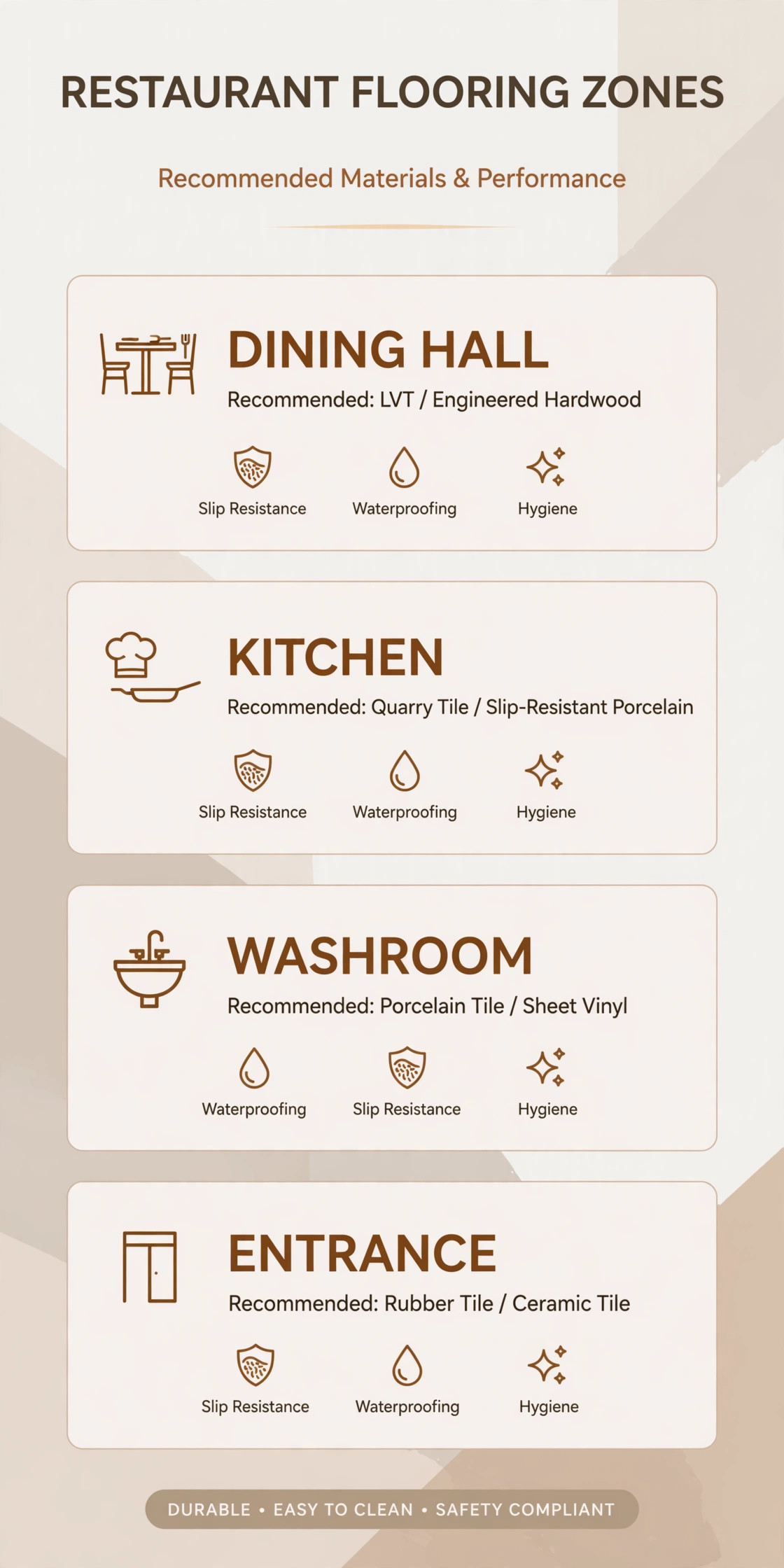
The most common mistake is choosing one beautiful floor for the entire venue. The dining hall needs good looks, R10 slip resistance, and scratch resistance against chair legs: SPC or LVT both work. The kitchen needs maximum hygiene, R11 slip resistance, and chemical resistance against degreasers: sheet vinyl or anti-slip porcelain. Washrooms need full waterproofing, covered in our waterproof bathroom flooring guide. The entrance needs a floor handling wet shoes, sand, and condensation, plus a proper entrance mat system, because most dirt and moisture walks in through the front door. Hotels face the same zoning challenge at larger scale, which is why our hotel flooring guide follows the same logic.
Installation details that decide whether it lasts
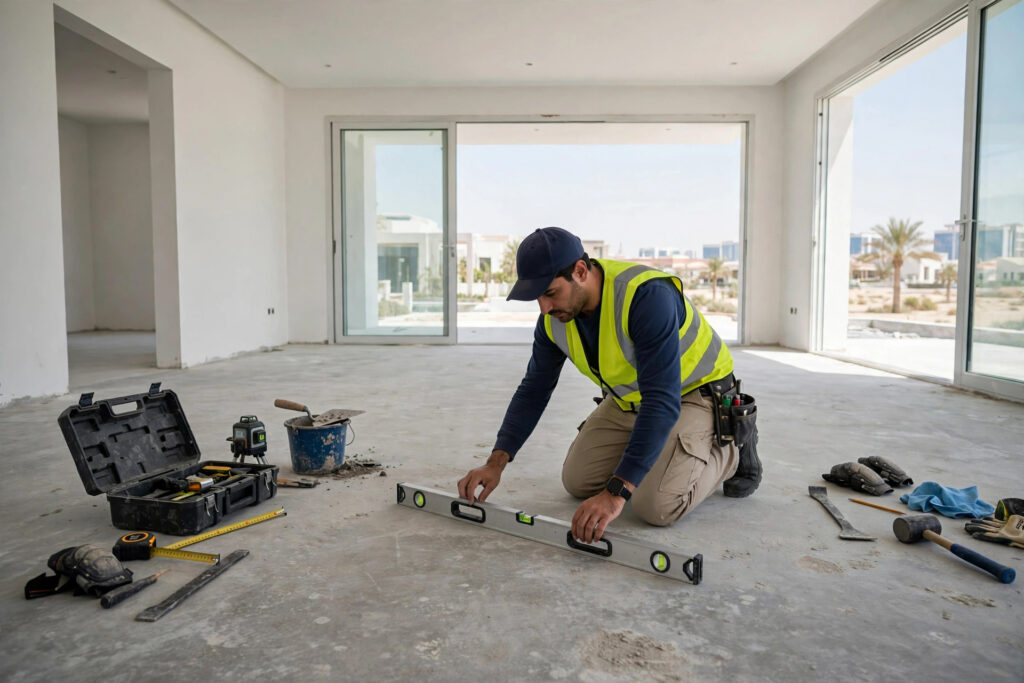
Commercial flooring fails more often from bad installation than bad material. The subfloor must be level and dry: UAE restaurant units are often bare shells with uneven concrete, and SPC laid over an uneven slab fails at the joints within months under trolley traffic. Expansion gaps must be respected near kitchen heat and sun-struck entrance glass, or the floor buckles. Transitions between zones need proper profiles, not silicone smeared over a gap, so trolleys roll cleanly and mops clean around them. And schedule flooring after the heavy trades finish and before furniture arrives, or other contractors will damage the new floor before opening night.
If you want a professional to plan your zones, message us on WhatsApp. We offer a free site visit anywhere in Abu Dhabi and will tell you honestly what each area needs.
Maintenance: keeping the floor inspection-ready
A restaurant floor needs a daily routine. Dry mop or vacuum first to remove sand and grit, because grit scratches wear layers. Then damp mop with a pH-neutral cleaner. In kitchens, use a degreaser rated for your floor type and rinse properly, since cleaner residue is itself a slip hazard. Avoid steam mops on click-joint flooring and abrasive pads on textured vinyl. Put felt glides on every dining chair leg: this one habit extends a dining floor’s life more than anything else. Schedule professional deep cleans of kitchen floors every few months to restore the rated slip resistance.
Frequently asked questions
What is the best flooring for a restaurant dining area in the UAE?
Commercial SPC or luxury vinyl tile with an R10 or higher slip rating. Both handle heavy traffic, spills, and daily mopping, and come in wood and stone looks suiting anything from a casual cafe to fine dining.
Can I use the same flooring in the kitchen and the dining room?
You can, but kitchens perform better with a dedicated surface. Sheet vinyl with welded seams or anti-slip porcelain handles grease, heat, and harsh degreasers better than click-joint products. Many venues use SPC in the dining room and sheet vinyl in the kitchen.
How do I keep restaurant floors from getting slippery?
Choose a rated slip-resistant floor, degrease daily, rinse away cleaner residue, and use entrance mats for moisture and sand. Slipperiness in restaurants is usually a maintenance issue, not a material issue.
Does restaurant flooring in the UAE need to meet hygiene rules?
Municipality food safety codes require food preparation floors to be smooth, non-absorbent, and easy to clean. Non-porous materials like SPC, sheet vinyl, and porcelain all comply. Cracked tiles and lifting edges are what inspectors flag, so installation quality matters as much as material.
How long does commercial restaurant flooring last?
With proper installation and daily maintenance, good commercial SPC or vinyl lasts many years in a dining area. Kitchens wear faster from grease, heat, and harsh cleaning. Chair glides, entrance mats, and scheduled deep cleans extend floor life the most.
Should I close the restaurant for flooring installation?
For a full replacement, yes, or work in sections during closed hours. A dining room can often be done in zones over a few nights. Plan this with your installer well before the fit-out starts.
Planning a new restaurant or refitting one in Abu Dhabi? Chat with us on WhatsApp for a free site visit. We will walk your unit, map the zones, and recommend flooring that handles your covers, your kitchen, and your cleaning routine. Find us at Shop No. AA-110, Capital Mall, Khourat Al Heel St, Mohamed Bin Zayed City, open Monday to Sunday, 10:00 to 22:00, or reach us on our contact page.