
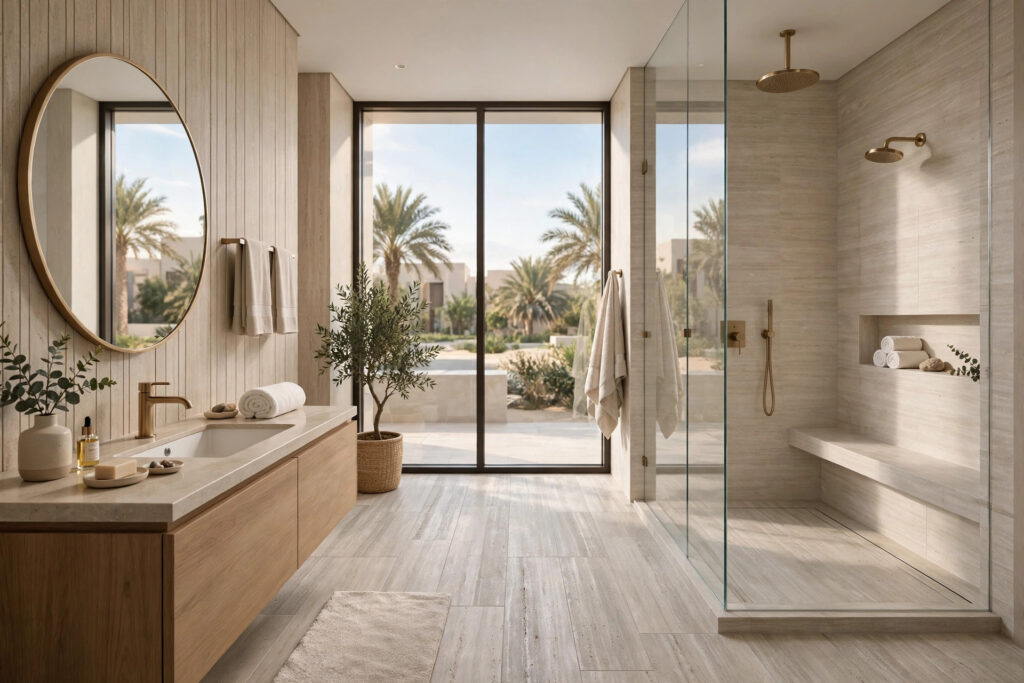
Short answer: The most practical waterproof bathroom flooring options in the UAE are SPC and LVT vinyl for their seamless, grout-free, warm surfaces, sheet vinyl for maximum watertightness, and porcelain tile for traditional durability. What matters more than the visible surface is the waterproofing beneath it: a proper membrane, correct falls to the drain, and sealed edges are what keep a bathroom dry for decades. In a climate this humid, mold prevention and slip resistance deserve equal billing with looks.
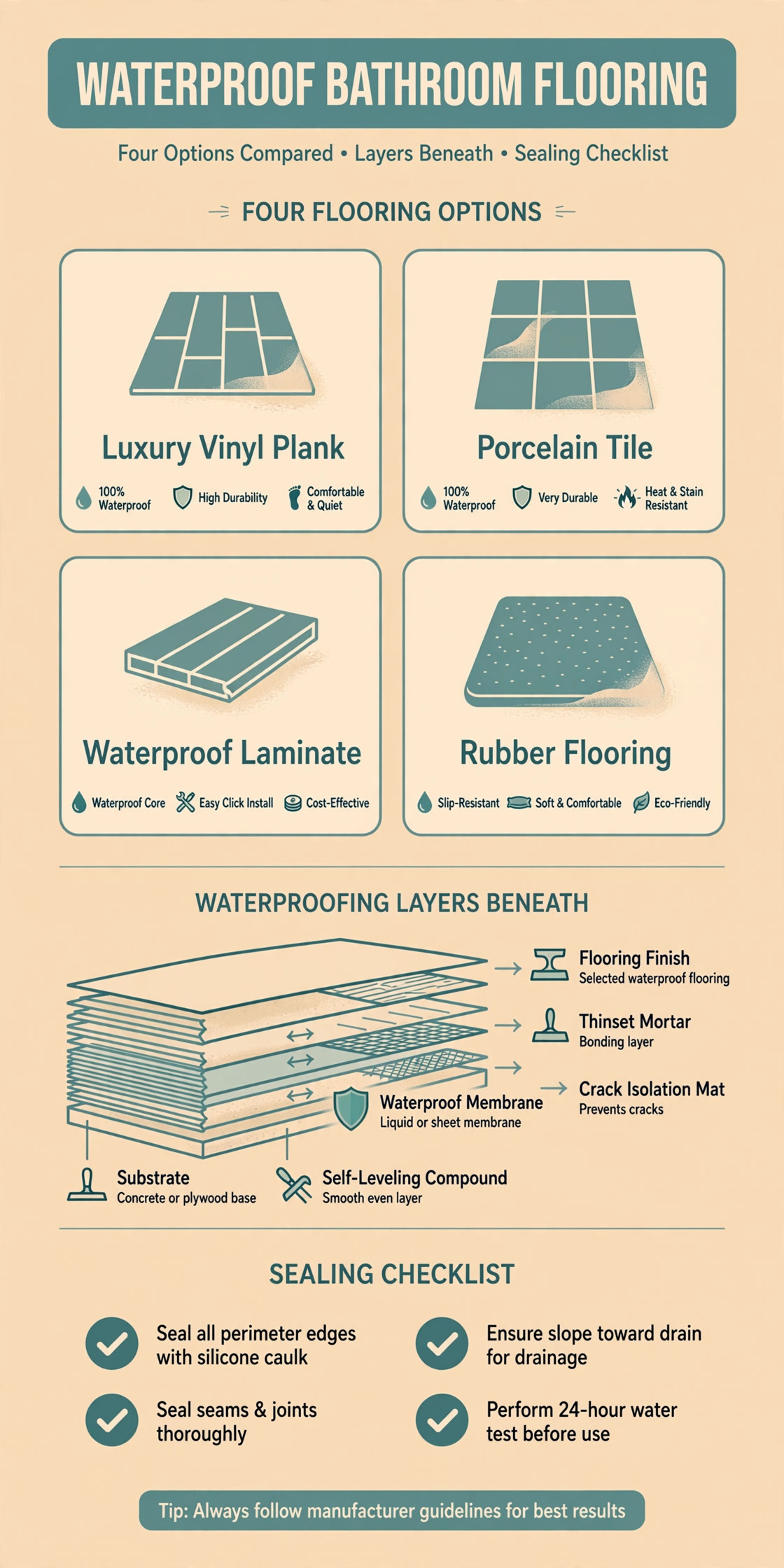
Bathroom flooring options in the UAE: what waterproof really means
A bathroom floor lives in standing water, steam, and humidity every single day. Waterproof here has to mean the whole assembly, not just the top surface. There are three layers that matter: the visible flooring, the waterproofing membrane beneath it, and the drainage falls that move water to the drain. A beautiful waterproof plank over a failed membrane is a renovation waiting to happen. When we assess bathrooms in Abu Dhabi homes, we check all three, because the surface is only as good as what is under it.
Two terms worth defining. Waterproof means water cannot pass through; water-resistant means it can resist water for a time but not indefinitely. Bathrooms need waterproof, full stop.
The waterproofing layer: the part you never see
Before any finish floor goes down, a bathroom needs tanking: a liquid or sheet waterproofing membrane applied to the slab and turned up the walls, especially in showers and around the bath. Falls, the slight slopes in the floor, must direct water to the drain rather than letting it pond in corners. Drains, pipe penetrations, and wall-to-floor junctions get reinforcing tape and sealant. This work is invisible once finished, which is exactly why it gets skipped in rushed jobs, and why failed bathrooms almost always fail here rather than at the surface. If your bathroom floor is being replaced because of leaks or mold, budget the waterproofing properly; it is the cheapest insurance in the whole project.
SPC flooring: the modern bathroom standard
SPC, stone plastic composite, has become the go-to bathroom floor for good reason. The rigid core ignores water completely, the click installation needs no adhesive to break down, and the grout-free surface means no moldy joints to scrub. It feels warmer under bare feet than tile, a genuine comfort difference on winter mornings, and textured finishes provide reliable wet grip. Stone and concrete looks suit contemporary bathrooms; wood looks warm up classic ones. Our SPC flooring range includes finishes specified for wet areas.
LVT: design freedom with full waterproofing
LVT, luxury vinyl tile, offers the same waterproofing in a more flexible plank with an enormous design range, including convincing marble and stone effects that suit high-end bathrooms. It is slightly softer underfoot than SPC. The requirement, as always with flexible vinyl, is a properly leveled base, since LVT shows every imperfection beneath it. In bathrooms this matters doubly, because the falls to the drain must be preserved in the leveling work. Done right, LVT flooring is elegant and completely practical.
Sheet vinyl: the most watertight surface
A single sheet of vinyl with heat-welded seams is as close to a waterproof skin as flooring gets. There are no joints for water to exploit at all. It is the pragmatic choice for family bathrooms that take heavy daily use, and for anyone who wants minimum maintenance. The trade-off is aesthetic: even premium sheet vinyl does not match plank realism. For a focused look at this option, see our guide to waterproof bathroom vinyl flooring in Abu Dhabi.
Porcelain tile: traditional and tough
Porcelain tile is waterproof, heat-proof, and as hard-wearing as it gets. In the UAE it remains the default bathroom surface in most new builds. Its weaknesses are the grout lines, which stain, need sealing, and can grow mold in humid bathrooms, and the cold, hard feel underfoot. Large-format tiles with tight epoxy-grouted joints are the best version of this option. If you keep tile, commit to the grout maintenance; if you want to escape grout entirely, the vinyl options above are the way.
Sealing: the details that keep water out
Every bathroom has the same vulnerable points: where the floor meets the shower curb or tray, around the toilet base and pedestal, where pipes penetrate, and along the bath edge. These all get flexible silicone sealant, not grout, because buildings move and rigid joints crack. Sealant needs inspection every year or two and replacement when it discolors, shrinks, or peels. Ten minutes of maintenance here prevents the slow leaks that rot subfloors and feed the mold problems we are regularly called to fix.
Mold prevention in UAE bathrooms
Bathrooms combine everything mold loves: moisture, warmth, and poor ventilation. The floor choices above remove grout as a food source, but habits matter too. Run the exhaust fan during and after showers, squeegee shower walls, and do not leave bathmats sitting damp on the floor for days. Pair the floor with wall finishes that do not trap moisture: PVC bathroom panels are grout-free and wipe clean, unlike painted drywall in a steamy room. If a bathroom has no window and weak extraction, say so during the site visit; ventilation advice is part of a proper flooring consultation.
Slip resistance for every age
Wet bathroom floors must grip. Choose textured, matte finishes and check the product’s wet slip rating rather than trusting the word anti-slip on a brochure. This matters most in homes with children or elderly family members; our anti-slip flooring guide for elderly homes covers ratings and room-by-room choices in depth. A bathmat with proper backing at the shower exit is a simple addition that prevents the most common bathroom slip.
Planning a bathroom refit? WhatsApp us photos of the space and book a free site visit anywhere in Abu Dhabi. We will check the existing waterproofing, falls, and ventilation, then recommend the right surface for how your household actually uses the room.
Frequently asked questions
What is the best waterproof flooring for bathrooms in the UAE?
SPC is the best all-rounder: fully waterproof, grout-free, warm underfoot, and available in stone and wood looks. Sheet vinyl is the most watertight; porcelain tile is the toughest. All three need proper waterproofing membrane and drainage beneath.
Can SPC flooring be used inside a shower area?
SPC handles wet-area use, but inside the shower enclosure itself, tiled falls and drainage detailing usually make porcelain the practical choice. SPC excels on the main bathroom floor outside the shower zone.
Do I need to waterproof under vinyl bathroom flooring?
Yes. The membrane beneath the finish floor is what protects the structure. Vinyl keeps surface water out, but waterproofing, falls to the drain, and sealed penetrations are separate and essential work.
How do I stop mold growing in my bathroom?
Ventilate with the exhaust fan, squeegee after showers, avoid leaving damp mats on the floor, choose grout-free surfaces like SPC or PVC panels, and reseal silicone joints before they fail. Persistent mold usually points to a ventilation or waterproofing problem worth investigating.
Is LVT slippery when wet in bathrooms?
Textured LVT with a proper wet slip rating grips well. Polished or high-gloss finishes can be slippery when wet, so choose matte, embossed finishes for bathrooms and check the rating.
How long does a bathroom floor installation take?
A straightforward like-for-like replacement is usually a few days including waterproofing cure times. Full refits with plumbing changes take longer. The membrane curing stage cannot be rushed, so be wary of anyone promising a one-day bathroom.
Get an honest bathroom assessment
Bathrooms reward proper preparation more than any other room. Visit our showroom at Shop No. AA-110, Capital Mall, Khourat Al Heel St, Mohamed Bin Zayed City, open Monday to Sunday 10:00 to 22:00, call +971 55 281 9239, or WhatsApp us for a free site visit anywhere in Abu Dhabi. We will check what is under your current floor before recommending what goes on top.


