Short answer: The safest anti slip flooring for elderly homes in the UAE is textured SPC or LVT vinyl with a rated slip-resistant surface, because it stays grippy when wet, feels warm underfoot, and has no grout lines or cold hardness like tile. Bathrooms and entrances need the highest slip resistance, while bedrooms and living areas can use softer options like carpet. Just as important as the material are level transitions between rooms, good lighting, and keeping floors free of the cleaning residues that make them slick. Falls are the leading cause of injury for older adults, so this is one decision worth getting right.

Anti slip flooring for elderly homes in the UAE: where falls happen
Falls among older adults most often happen in familiar places: the bathroom, the kitchen, the entrance, and on stairs. In UAE homes there is a specific culprit worth naming: large-format polished porcelain and marble-look tiles. They look luxurious and they stay cool, which is why developers love them, but a polished tile with wet feet is one of the slipperiest surfaces in a home. Add a bathroom with no window, condensation from hot showers, and a parent or grandparent moving a little unsteadily, and the risk is real.
Public health authorities treat this seriously: the CDC’s fall prevention resources note that most falls are preventable with changes to the home environment, and flooring is one of the highest-impact changes you can make. The goal is not to wrap the house in padding. It is to choose surfaces that grip in real conditions: wet, soapy, sandy, and in bare feet.
What slip ratings actually mean
Flooring slip resistance is measured two main ways you will see on product data sheets.
R ratings (DIN 51130). A scale from R9 to R13, tested with oil on an inclined surface. R9 is the minimum for dry living areas; R10 suits kitchens and entrance areas; R11 and above are for wet commercial zones like pool surrounds. For an elderly person’s bathroom, look for R10 or higher.
Pendulum test values (PTV). Common in British and international guidance, this simulates a shoe or bare foot slipping. A PTV of 36 or above in wet conditions is generally considered low slip potential.
You do not need to memorize the standards. You need to ask one question when choosing: what is this product’s slip rating in wet conditions? A reputable supplier will have the number. If nobody can give you one, treat that as information too.
Best flooring options for elderly safety, room by room
Bathrooms: textured waterproof vinyl or SPC, R10 or above. This is the highest-risk room and deserves the highest-rated surface. Textured SPC flooring or LVT flooring with an embossed, non-polished finish grips bare feet even when wet, and being grout-free means no slippery soap film building up in joints. Keep silicone seals intact so water cannot get underneath. For the full bathroom picture, see our guide to waterproof bathroom flooring options.
Kitchens: textured SPC or LVT. Kitchens combine water, oil, and quick movement. The same textured vinyl family works here: grippy, warm, and easy to clean after cooking. Avoid high-gloss finishes anywhere near the sink and stove.
Entrances and hallways: durable textured vinyl. Entrances collect sand and occasional rainwater tracked in during storms. A textured surface with a mat both outside and inside the door handles this. Hallways are also where most trip hazards live, so keep transitions between rooms perfectly level.
Bedrooms and living rooms: carpet or soft vinyl. Wall-to-wall carpet is the softest landing if a fall does happen, and it is warm and quiet. The trade-off is that thick, soft carpet can catch walking frames and make wheelchairs harder to push; a low-pile, firm carpet is the safer choice. Textured SPC or LVT is the alternative: firmer underfoot but easier for mobility aids.
Stairs: treat with special care. Stairs deserve non-slip nosing strips, good lighting on every step, and a handrail. Carpeted stairs with firm pile, or vinyl with anti-slip nosing, both work. This is one area where professional installation really matters.
The details that matter as much as the material
Level transitions. Even a small lip between the hallway and the bathroom is a trip hazard for shuffling feet. Transitions should be flush or ramped, never a raised metal strip to catch a toe.
Lighting. Falls happen in dim corners. Motion-sensor night lights along the path from bedroom to bathroom cost little and prevent the most dangerous kind of fall: the 3 a.m. one.
Cleaning residue. Some floor cleaners leave an invisible film that makes vinyl slicker, especially when damp. Use pH-neutral cleaners at proper dilution and rinse well. If a floor feels slippery after mopping, the cleaner is usually the cause, not the floor.
Rugs and mats. Loose rugs are a classic fall cause. If rugs are used, they need proper non-slip underlay, taped edges, and low profiles that walking aids can cross. In bathrooms, use mats with suction or rubber backing, and replace them when the backing wears smooth.
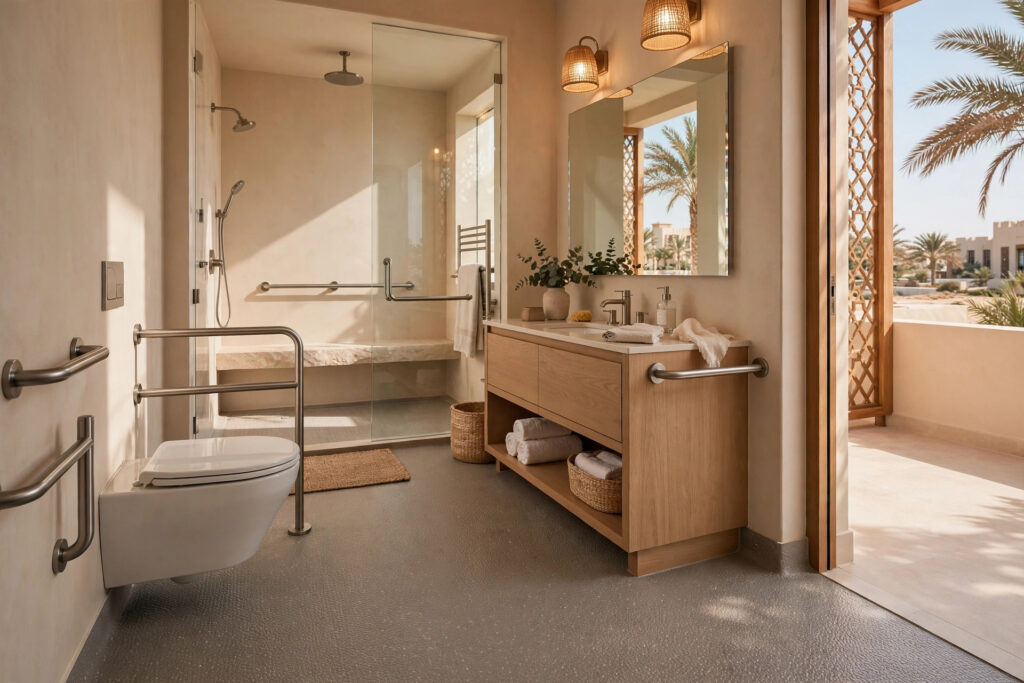
Grab bars and handrails. Flooring is half the equation; support is the other half. Grab bars in the bathroom and a rail on every staircase multiply the safety benefit of a good floor.
What to avoid
High-gloss polished tiles and polished stone in wet areas are the main thing to replace or cover. Very thick, plush carpet that grabs at feet and walkers is another. And be wary of stick-on anti-slip strips as a permanent solution: they peel, collect dirt at the edges, and give a false sense of security once worn. They are fine as a stopgap while you plan a proper refit.
Worried about a parent’s bathroom or a slippery villa entrance? Message us on WhatsApp and we will assess the slip risk on a free site visit anywhere in Abu Dhabi and show you rated samples you can test with wet feet, the honest way.
Planning the work with minimal disruption
Reflooring an occupied home with an elderly resident needs planning: do it one zone at a time so there is always a safe path through the house, keep the bathroom usable or schedule around it, and make sure temporary coverings lie perfectly flat. A professional installer who has done occupied villas before will plan the sequence with you rather than just turning up with boxes.
Many of the same principles apply to young children, so if grandchildren visit often, our guides to safe flooring for kids’ rooms and child-safe nursery flooring are worth a read alongside this one.
Frequently asked questions
What is the safest flooring for elderly people in the UAE?
Textured SPC or LVT vinyl with a documented wet slip rating is the best all-round choice: grippy when wet, warm underfoot, and grout-free. Low-pile carpet suits bedrooms. The key is matching the rating to the room, with bathrooms getting the highest.
Are tiles dangerous for elderly people?
Polished tiles are slippery when wet and very hard when fallen on, which is a bad combination. Textured or matte tiles are better, but textured vinyl generally outperforms tile on both grip and impact softness.
What slip rating should bathroom flooring have for seniors?
Look for R10 or higher on the DIN scale, or a wet pendulum value of 36+. Ask the supplier for the rating in writing rather than accepting “anti-slip” as a marketing word.
Is carpet safe for elderly homes?
Low-pile, firm carpet is safe and softens falls, which makes it good for bedrooms and living rooms. Avoid thick plush carpet, which can catch feet and impede walking frames and wheelchairs.
Can anti-slip coatings make my existing tiles safer?
Anti-slip treatments and coatings can improve grip temporarily, but they wear unevenly and need reapplication. For a long-term solution in a home with elderly residents, replacing the surface with a rated product is more reliable.
How much does it cost to make a bathroom floor anti-slip?
Pricing depends on the room size, the product chosen, and the subfloor condition, so it is best assessed on site. What drives the budget is mainly material choice and whether old tiles need removal. WhatsApp us for a free site visit and an honest assessment anywhere in Abu Dhabi.
Make the home safer, one room at a time
You do not have to refloor the whole house at once. Start with the bathroom, then the entrance and kitchen, the rooms where falls actually happen. Visit our showroom at Shop No. AA-110, Capital Mall, Khourat Al Heel St, Mohamed Bin Zayed City, open Monday to Sunday 10:00 to 22:00, call +971 55 281 9239, or WhatsApp us to book a free site visit anywhere in Abu Dhabi. We will bring rated samples, check your transitions and lighting, and plan the work around your family’s routine.