Short answer: The best waterproof flooring for kitchens in the UAE is SPC (stone plastic composite) or quality LVT (luxury vinyl tile), because both stand up to spills, steam, mopping, and humidity without swelling. Sheet vinyl is also fully waterproof and budget-sensible, while porcelain tile works but needs grout maintenance. What matters as much as the material is the installation: sealed edges, a level subfloor, and proper transitions are what keep a kitchen floor watertight for years. Get those right and any of the top options will serve a busy kitchen well.
Waterproof flooring for kitchens in the UAE: what actually matters
Kitchens punish floors more than any other room. Water boils over, the sink splashes, the fridge leaks one day, and in the UAE the room also sits in humid air for months while the AC cycles cold. A floor that is merely water-resistant, like standard laminate, can survive a quick wipe but not a slow leak under the dishwasher. Truly waterproof options do not absorb water at all, so the question shifts from the material to the weak points: seams, edges, and what lies underneath.
That is why installers talk about a waterproof floor as a system, not just a product. The planks or tiles are one part; the subfloor preparation, the sealing around cabinets and appliances, and the transition strips at doorways are the parts that decide whether spilled water stays on top or finds its way down.
SPC flooring: the kitchen workhorse
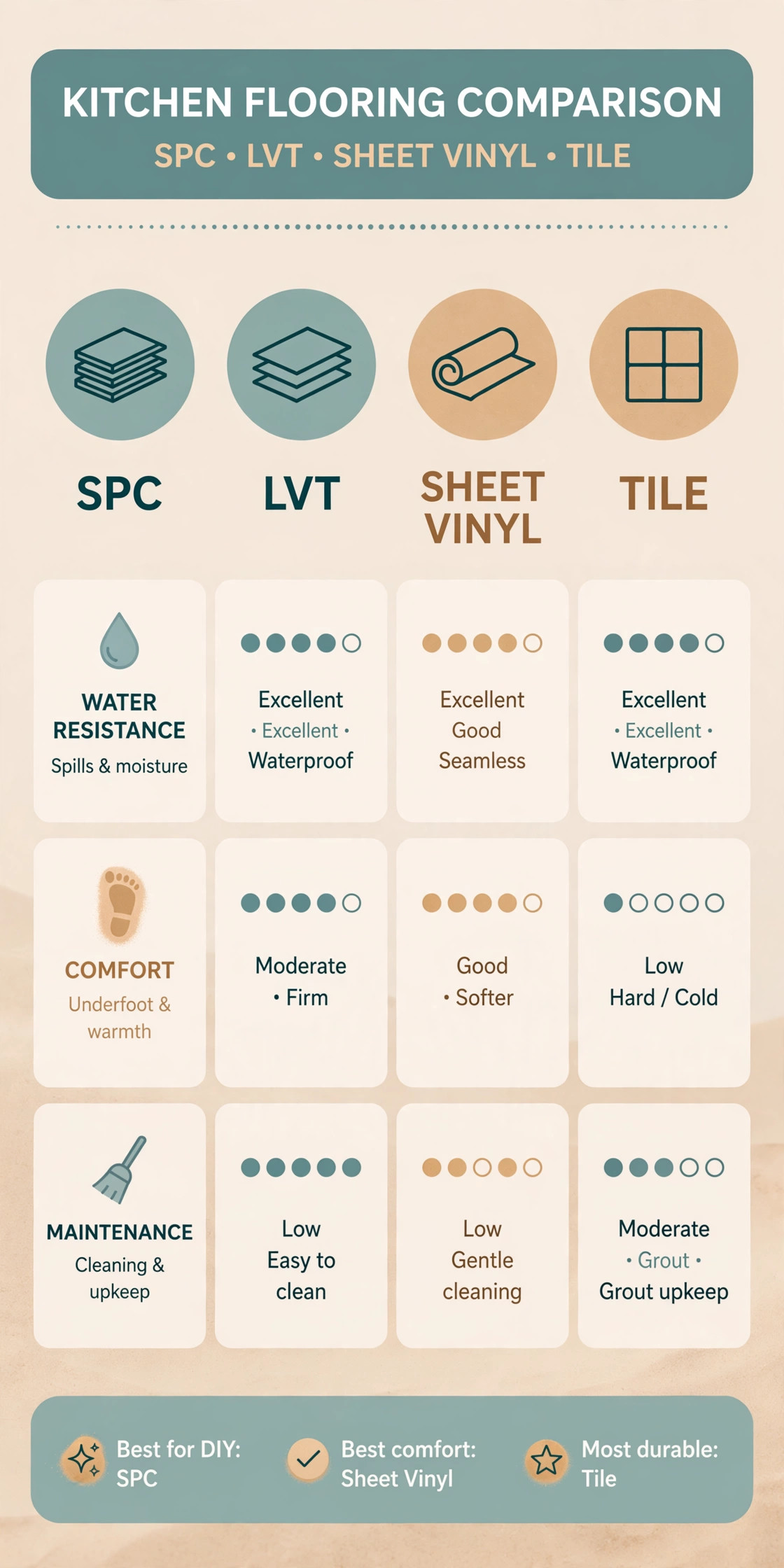
SPC stands for stone plastic composite. Its core is a rigid mix of limestone powder and stabilizers, which means it does not expand, contract, or swell the way wood-based floors do. For kitchens, that rigidity is the whole story: boiling water, steam from cooking, and daily mopping do not change its shape.
Click-together SPC installs floating over the subfloor, so there is no adhesive to break down if moisture gets near an edge. It feels solid underfoot, handles dropped pots better than tile (it will dent rather than crack, and it is kinder to the pot), and modern wood and stone looks are convincing. If you want one material that covers waterproofing, durability, and looks in a UAE kitchen, SPC is the default recommendation, and our SPC flooring range is built around exactly these demands.
LVT: comfort and style with full waterproofing
LVT, luxury vinyl tile, is the flexible cousin of SPC. It is fully waterproof, warmer and slightly softer underfoot, and comes in the widest range of designs, from oak planks to marble-look tiles. In kitchens where someone stands cooking for long stretches, that slight give is genuinely noticeable.
The trade-off is that flexible LVT shows subfloor imperfections more readily, so it demands a well-leveled base. Glue-down LVT also relies on adhesive, which is fine in kitchens but means the installation quality matters even more around the sink and dishwasher. Done well, LVT flooring is an excellent kitchen choice, especially when you want a softer feel or a specific stone look.
Sheet vinyl: the quiet, fully waterproof option
Sheet vinyl comes in rolls and is heat-welded or glued with minimal seams, which makes it arguably the most waterproof of all: water simply has nowhere to go. It is a single continuous surface, easy to mop, and forgiving of imperfect subfloors.
The compromise is looks and feel. Even good sheet vinyl does not match the realism of SPC or LVT planks, and sharp objects can cut it. For rental kitchens, laundry corners, and anyone who prioritizes function over form, vinyl flooring in sheet form is hard to beat.
Porcelain tile: the traditional UAE kitchen floor
Most Abu Dhabi kitchens were built with porcelain or ceramic tile, and it remains a legitimate option: the tile itself is waterproof and nearly indestructible. The weakness is the grout. Grout lines absorb stains, harbor grease, and in humid conditions can grow mold if not sealed and cleaned. Large-format tiles with tight, sealed grout joints minimize this, but the maintenance never fully goes away. Tile is also cold and unforgiving: dropped glass shatters, and standing on it for long cooking sessions is tiring.
What to avoid in a UAE kitchen
Standard laminate is the main one to be careful with. Its wood-based core swells when water reaches it, and kitchen edges, around the sink, dishwasher, and fridge water line, are exactly where water reaches. So-called water-resistant laminates buy time against spills but not against leaks. Solid hardwood has the same vulnerability plus movement from humidity swings. If you love the wood look, get it from SPC or LVT instead.
Installation details that make or break waterproofing
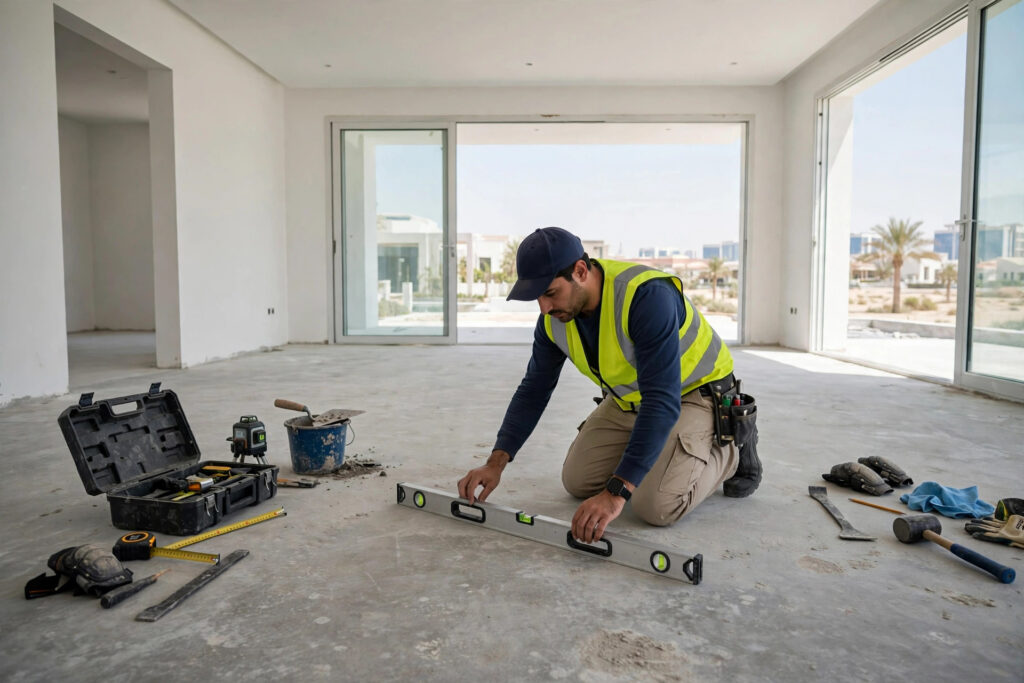
This is the part homeowners underestimate. A waterproof product installed carelessly is not a waterproof floor.
- Subfloor levelness. Standing water finds low spots and sits there. The base should be flat before anything goes down.
- Sealed perimeters. Silicone where the floor meets cabinets, islands, and appliance recesses stops water running underneath.
- Appliance zones. The areas under dishwashers, fridges with water dispensers, and washing machines deserve extra attention and ideally a leak tray or mat.
- Transitions. Where the kitchen meets the hallway or living room, the transition strip should be sealed, not just laid.
- Expansion gaps. Floating floors need a small gap at walls, hidden under skirting, so seasonal movement does not push planks against cabinets and open seams.
Living with it: kitchen floor maintenance in the UAE
Daily life is simple: sweep or vacuum the sand and grit that blows in (grit is what scratches floors here, more than water), then damp mop with a pH-neutral cleaner. Avoid soaking the floor, skip steam mops on click systems unless the manufacturer allows them, and wipe up spills rather than leaving them. Grease near the stove responds to a degreasing wipe before mopping. With these habits, a quality waterproof floor in a kitchen lasts many years without drama.
Choosing between the options often comes down to feel and look, which is why we wrote a full rundown of kitchen flooring options in Abu Dhabi and a focused guide on SPC flooring for kitchens. If you are still deciding between materials, our article on how SPC handles the UAE climate covers the heat and humidity angle in depth.
Trying to choose between SPC and LVT for your kitchen? WhatsApp us a photo of the space and we will recommend the right option on a free site visit anywhere in Abu Dhabi, with samples you can see in your own light.
Frequently asked questions
Is SPC flooring really 100% waterproof?
The SPC plank itself does not absorb water, so spills, mopping, and steam will not damage it. The installation still needs sealed edges and a dry subfloor, because water can travel underneath any floating floor through unsealed gaps.
Can I install waterproof flooring over my existing kitchen tiles?
Often yes, if the tiles are sound, level, and well bonded. Deep grout lines may need skimming so they do not telegraph through, and the added height at doorways and under appliances must be checked. An installer should assess this on site.
Which is better for kitchens, SPC or LVT?
Both are waterproof. SPC is more rigid, more dent-resistant, and more forgiving of minor subfloor unevenness. LVT is softer underfoot and offers more design variety. For heavy-use family kitchens, SPC usually wins; for comfort and style-first kitchens, LVT is excellent.
Does waterproof kitchen flooring need grout?
No. SPC, LVT, and sheet vinyl are grout-free, which is one of their biggest advantages over tile: no grout lines to stain, seal, or scrub.
How do I protect the floor around the sink and dishwasher?
Keep silicone seals intact where flooring meets cabinetry, use a mat in front of the sink, and check under-sink plumbing for slow drips a couple of times a year. Most kitchen floor failures start with a leak nobody noticed.
Will a waterproof floor stop mold underneath?
The floor surface will not grow mold, but trapped moisture beneath any floor can. A dry subfloor, sealed edges, and fixing leaks promptly are what prevent mold, regardless of the flooring material.
Visit our Abu Dhabi showroom
The best way to choose is to stand on the options. Visit us at Shop No. AA-110, Capital Mall, Khourat Al Heel St, Mohamed Bin Zayed City, open Monday to Sunday 10:00 to 22:00, call +971 55 281 9239, or WhatsApp us to book a free site visit anywhere in Abu Dhabi. Bring your kitchen measurements and we will help you compare SPC, LVT, and vinyl side by side.