Short answer: The strongest kitchen flooring options in Abu Dhabi are SPC and LVT for their waterproofing and comfort, porcelain tile for raw durability, and sheet vinyl for a seamless, practical surface. Standard laminate and hardwood struggle with kitchen moisture and humidity. The right choice depends on how you cook, whether the kitchen is open-plan, and whether you prioritize easy cleaning, underfoot comfort, or a particular look. Whichever you pick, sealed edges and a level subfloor matter as much as the material itself.
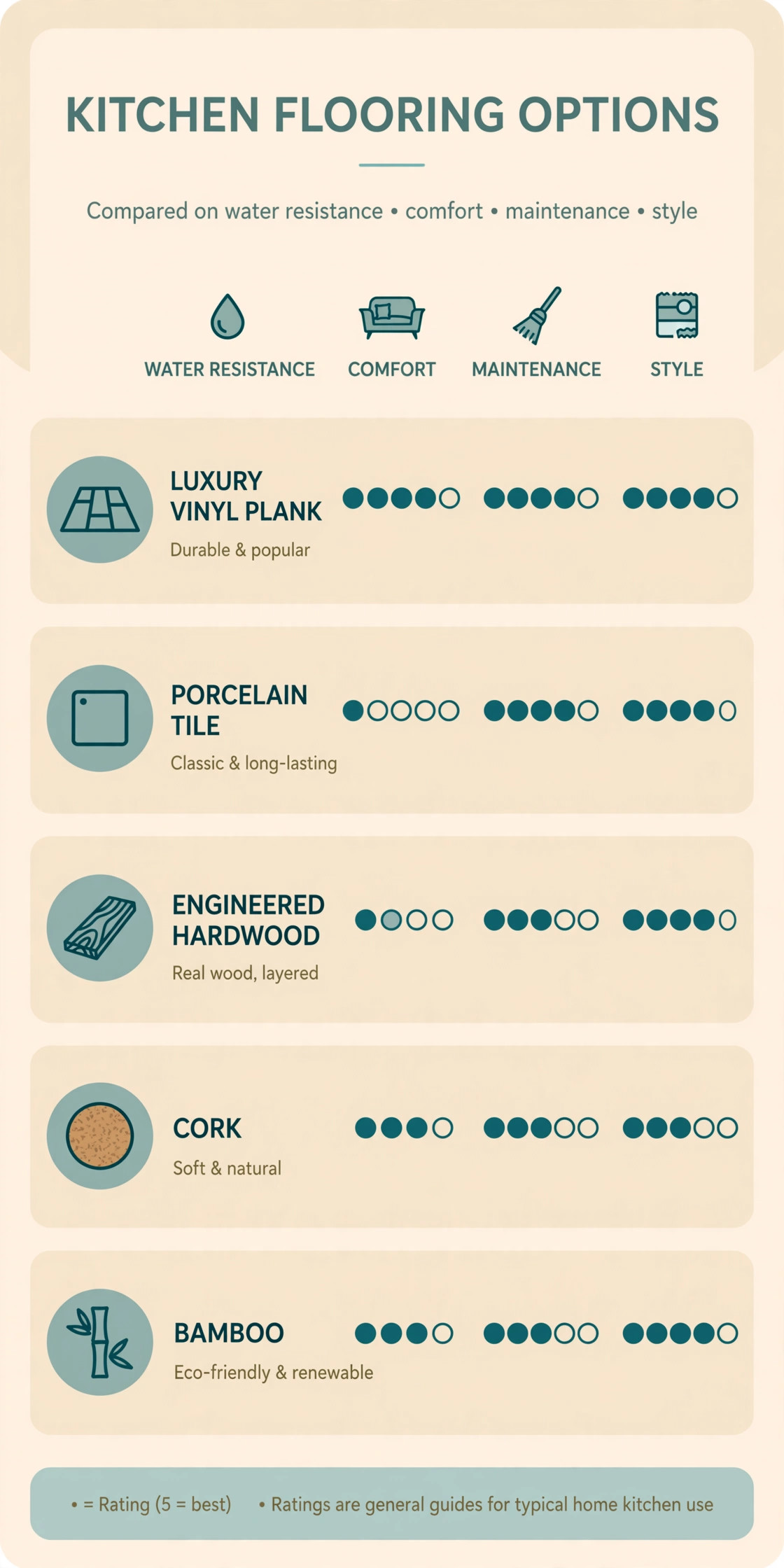
Kitchen flooring options Abu Dhabi homeowners ask about most
Every kitchen consultation starts with the same questions: how much water does this room really see, who cooks here, and what does the rest of the home look like? A villa kitchen where big family meals are cooked daily is a different brief from a compact apartment kitchen used for light cooking. Before comparing materials, it helps to fix your priorities in this order: waterproofing first, then durability, then comfort, then looks. A beautiful floor that swells at the sink is a renovation you will do twice.
SPC flooring: the all-rounder
SPC, stone plastic composite, is the option we recommend most often for kitchens, and for straightforward reasons. The rigid limestone-based core does not swell, so boiling water, steam, and daily mopping do not change its shape. Click installation means no adhesive to fail near the dishwasher. It is hard enough to resist dents from dropped utensils yet forgiving enough that a dropped plate sometimes survives. The wood and stone designs have become genuinely convincing.
For a full breakdown of how SPC behaves in local conditions, read our SPC flooring for kitchens guide and the broader SPC flooring collection. If waterproofing is your top concern, our waterproof flooring for kitchens article compares the watertight options head to head.
LVT: the comfort pick
LVT, luxury vinyl tile, trades some of SPC’s rigidity for a softer, warmer feel underfoot, which long cooking sessions appreciate. The design range is the widest of any kitchen option: pale oaks, dark walnuts, marble looks, concrete looks. It is fully waterproof and easy to clean.
The catch is subfloor preparation. Flexible LVT follows every dip and ridge in the base, so the slab or old tiles beneath must be properly leveled, and glue-down versions depend on adhesive quality around wet zones. With correct preparation, LVT flooring is a superb kitchen floor; without it, you will feel every shortcut.
Porcelain tile: the traditional choice
Most Abu Dhabi kitchens were built with tile, and porcelain remains nearly indestructible: heat-proof, waterproof, and immune to stains when glazed. The downsides are comfort and maintenance. Tile is cold and hard, tiring to stand on and merciless to dropped glassware. Grout lines collect grease and need periodic sealing and scrubbing, and in humid conditions unsealed grout can harbor mold. Large-format tiles with minimal, sealed grout joints are the modern way to do it if you choose tile.
Sheet vinyl: seamless and sensible
Sheet vinyl arrives in rolls and goes down with minimal seams, making it one of the most watertight options available. It is forgiving of imperfect subfloors, easy to mop, and practical for rental kitchens or utility areas. The compromise is realism and repairability: it looks like vinyl, and a deep cut cannot be patched invisibly the way a single SPC plank can be replaced. For pure function, vinyl flooring in sheet form earns its place.
What about laminate?
Standard laminate’s wood-based core and kitchen water do not mix. Around sinks, dishwashers, and fridge water lines, moisture eventually finds the edges and the core swells. Water-resistant laminates buy time against quick spills but not against slow leaks. If you want the click-together wood look in a kitchen, SPC gives you the same installation with a core that ignores water. Our comparison of waterproof laminate vs SPC lays out the difference honestly.
Villa kitchens vs apartment kitchens
Villa kitchens in Abu Dhabi tend to be larger, see heavier daily cooking, and sit on ground-floor slabs where moisture management matters more. Durability and waterproofing lead the brief. Apartment kitchens are smaller, often open to the living area, which raises a design question: one continuous floor flowing through, or a defined kitchen zone? Continuous SPC or LVT through an open-plan space makes compact apartments feel larger and avoids awkward transitions. Separate zones let you put maximum waterproofing in the kitchen and something softer in the living area. There is no wrong answer, but decide before ordering materials.
Style notes that actually matter
Light wood tones keep kitchens feeling bright and show less dust, which is a real consideration with UAE sand. Mid-tone woods hide crumbs and everyday marks best. Dark floors look dramatic but show every footprint and dust mote, meaning more sweeping. Large planks suit spacious villa kitchens; narrower planks feel right in compact apartment galleys. Matte and low-sheen finishes hide wear far better than glossy ones and are less slippery when wet.
Installation details for kitchens
Kitchens have more fixed obstacles than any other room, and each is a potential water path: cabinet plinths, island bases, appliance recesses, pipe penetrations. Silicone sealing at all of these is what makes a waterproof product into a waterproof floor. Under-sink and under-dishwasher areas deserve leak trays or at least periodic checks. If you are replacing a kitchen floor, coordinate with any plumbing work first; it is far cheaper to move a pipe before the floor goes down than after.
Measuring a kitchen with its angles and island cutouts is fiddly, so our villa quantity estimator helps you work out material quantities before you visit.
Choosing between the top contenders? WhatsApp us photos of your kitchen and we will recommend the right option on a free site visit anywhere in Abu Dhabi, with samples you can compare in your own lighting.
Frequently asked questions
What is the best flooring for a kitchen in Abu Dhabi?
For most homes, SPC: fully waterproof, dent-resistant, comfortable enough for daily cooking, and stable in humidity. LVT suits those who prioritize softness and design variety; porcelain tile suits those who want maximum heat and scratch resistance and accept grout maintenance.
Can I put SPC flooring in a kitchen with heavy daily cooking?
Yes, that is exactly what it is made for. Steam, splashes, and mopping do not affect it. Just keep silicone seals intact around cabinets and check under-sink plumbing periodically, as with any kitchen floor.
Should kitchen flooring match the living room floor?
In open-plan apartments, running the same floor through both spaces looks seamless and spacious. In closed kitchens, matching is optional. Either way, use a proper transition strip where materials change.
Is tile or vinyl better for kitchens?
Tile wins on heat resistance and hardness; vinyl (SPC or LVT) wins on comfort, warmth, grout-free cleaning, and forgiveness when things drop. Most families we work with prefer vinyl for daily cooking kitchens.
How do I protect kitchen flooring from water damage?
Seal edges with silicone, use mats at the sink, fix plumbing drips immediately, and avoid soaking the floor when mopping. Most kitchen floor damage starts with an unnoticed slow leak, not with cooking splashes.
Can new kitchen flooring go over my old tiles?
Often yes, if the old tiles are sound and level. Deep grout lines need skimming, and clearances under appliances and doors must be checked. An on-site assessment confirms it quickly.
See the options in person
Flooring is a touch-and-stand-on decision. Visit our showroom at Shop No. AA-110, Capital Mall, Khourat Al Heel St, Mohamed Bin Zayed City, open Monday to Sunday 10:00 to 22:00, call +971 55 281 9239, or WhatsApp us to book a free site visit anywhere in Abu Dhabi. Walk on SPC, LVT, and vinyl side by side and choose with confidence.