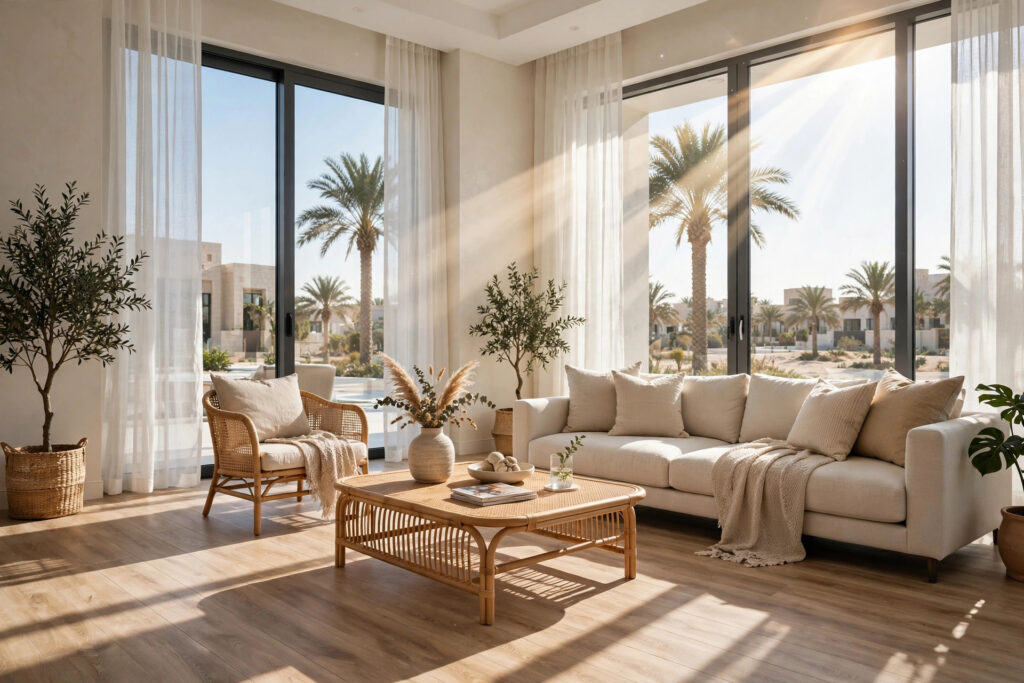
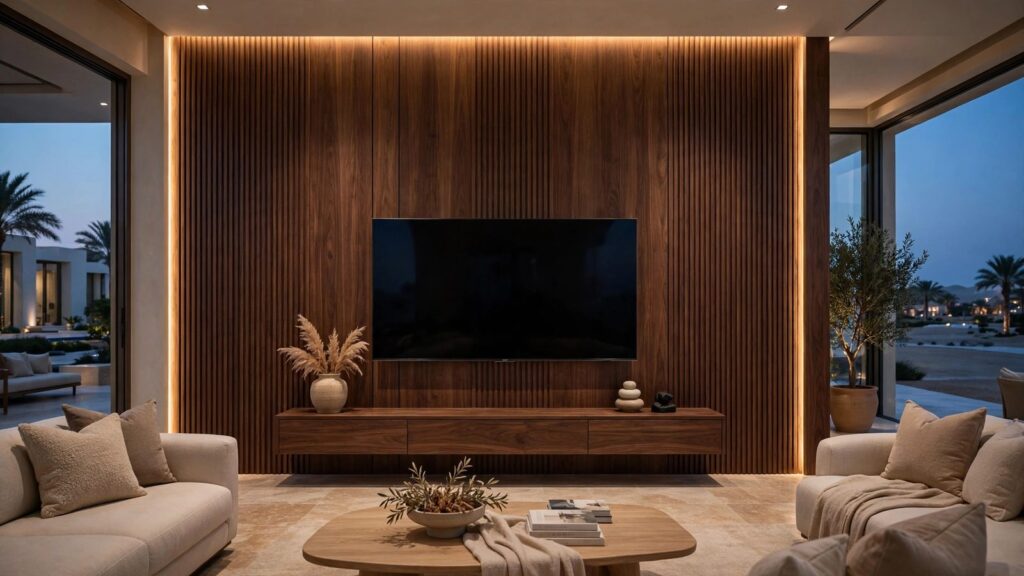
Short answer: Acrylic cladding in the UAE is a lightweight, glossy sheet material used to cover walls in homes and commercial spaces, giving a sleek glass-like finish without the weight or fragility of real glass. It handles the local climate well when you choose UV-stabilized sheets, it comes in a wide range of colors and finishes, and it is easy to keep clean with just soap and water. For feature walls, kitchens, offices and retail spaces across Abu Dhabi and the wider UAE, it is one of the most practical ways to get a premium look.

What acrylic cladding actually is
Acrylic cladding is made from polymethyl methacrylate, usually just called acrylic or PMMA. It is the same family of material as the clear sheets used for shop displays and aquariums, but for wall cladding it comes in solid colors, mirror finishes and textured designs rather than just clear.
The sheets are manufactured flat and smooth, then fixed onto walls with adhesive, screws with decorative caps, or a framing system depending on the surface and the look you want. Because the material is a thermoplastic, it can also be heat-formed around gentle curves, which opens up design options that rigid materials cannot match.
If you have seen a glossy, almost liquid-looking feature wall in a new villa or a shiny branded wall in a cafe, there is a good chance it was acrylic. It has become a familiar sight in newer interiors across the Emirates because it photographs beautifully and suits the clean, modern style that dominates local design.
Where acrylic cladding works in UAE homes
In villas and apartments, acrylic cladding is mostly a feature-wall material. The living room wall behind the TV or sofa is the classic spot. A high-gloss sheet in a deep color turns a plain wall into the focal point of the room, and it bounces light around in a way that makes the space feel bigger.
Kitchens are another natural fit. Acrylic sheets work well as a backsplash or as cladding on a breakfast bar front, because the surface wipes clean and does not absorb cooking grease the way painted walls do. Bedrooms use it more sparingly, often as a headboard wall or inside wardrobes with mirrored acrylic to add depth. Bathrooms and kitchens are covered in the FAQ below.
Commercial uses across the UAE
Walk through any new mall, clinic or restaurant fit-out in Abu Dhabi and you will see acrylic cladding doing heavy lifting. Retailers love it for branded walls and display backdrops because colors stay vivid and logos can be printed or inlaid directly. Clinics and salons use it because the seamless glossy surface looks hygienic and wipes down fast between clients.
Offices use acrylic for reception walls, meeting room accents and writable glossy surfaces that double as whiteboards. Restaurants and cafes use it behind counters and bars, where the shine reads as premium under warm lighting. Because the sheets are light, they can go up on partition walls that could never carry the weight of glass or stone.
Why it suits the UAE climate
The local climate is the real test for any interior material, and acrylic passes it well with one condition: the sheets need to be UV-stabilized if they will see direct sunlight. Standard acrylic can yellow over time under strong UV, but UV-stabilized grades are made to resist that, which matters in a country where sun streams through glass facades most of the year. That UV resistance is confirmed by material comparisons from glazing specialists (FGD Glass).
Heat itself is not a problem for interior applications. Acrylic is dimensionally stable in normal indoor temperatures, and unlike some wall coverings it does not peel or bubble in humidity. That makes it a safe choice for kitchens and bathrooms where steam is a daily reality.
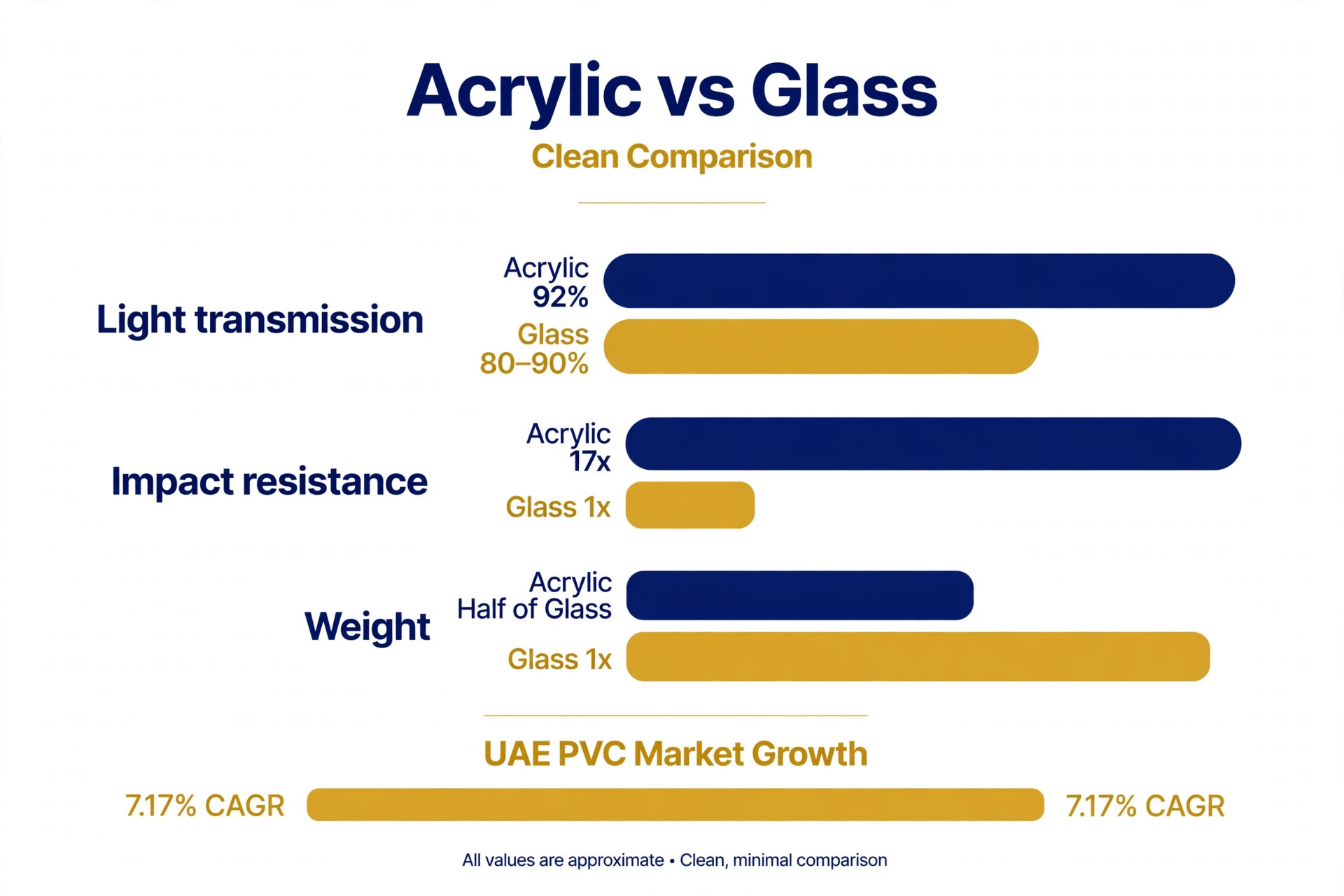
There are also measurable performance reasons designers keep choosing it. Acrylic transmits about 92% of light, compared with 80 to 90% for glass, it is roughly 17 times more impact resistant than glass, and it weighs about half as much (QUANDA Plastic). In practice that means brighter rooms, far less worry about accidental knocks, and simpler fixing on ordinary walls.
Finishes and looks you can choose
The range is wider than most people expect:
High gloss solid colors. The signature look. Deep navy, emerald, charcoal or crisp white with a mirror-like shine. This is the finish that makes feature walls glow.
Mirror acrylic. A lightweight alternative to real mirror, popular inside wardrobes, in salons and behind bar counters. It gives the reflective effect at a fraction of the weight.
Matte and frosted. For anyone who loves the color range but not the shine, matte finishes give a soft, contemporary surface that hides fingerprints better.
Textured and patterned. Fluted, brushed and stone-effect textures add depth and are more forgiving of the fine scratches that glossy sheets can show over time.
Backlit and translucent. Opal and frosted sheets can be lit from behind for a glowing wall effect, a favorite in restaurant and hotel lobbies.
When choosing, think about the room first and the color second. A busy family living room will be kinder to a textured or mid-tone finish than to piano-black gloss, which shows every fingerprint. A formal majlis or reception wall, touched less often, can carry the full mirror shine.
Acrylic cladding vs the alternatives
The honest comparison most buyers want is acrylic against glass and against PVC wall panels.
Against glass, acrylic wins on weight, safety and ease of installation. Glass gives a harder surface that resists scratches better, so for a tabletop or a splash zone that takes daily abrasion, glass still has an edge. For wall cladding, where nothing rubs against the surface all day, acrylic’s advantages usually win.
Against PVC wall panels, the difference is mostly about the look. PVC panels are excellent value and come in plenty of designs, including marble and wood effects, which is why they are so popular in the UAE. Acrylic sits a step above in gloss and depth of color. Many projects use both: PVC panels for large wall areas and acrylic as the accent. Our comparison of WPC vs PVC wall panels goes deeper into how the panel family fits together.
How to choose the right sheets
A few practical checks separate a good result from a disappointing one:
Check the thickness. Thicker sheets (within the standard cladding range) feel more solid and resist flexing on the wall. Your installer can advise what suits your wall type.
Ask for UV-stabilized grade if the wall gets direct sun, for example opposite full-height windows or in a sunroom. This is the single most important specification in the UAE.
Look at the edges. Good fabrication means polished, clean edges. Rough or cloudy edges are a sign of rushed cutting and they catch the eye on every seam.
Plan the seams. Acrylic sheets come in set sizes, so a good installer plans the layout so seams fall in natural breaks or symmetrical lines rather than randomly across the wall.
Match the fixing to the wall. Smooth concrete or plasterboard takes adhesive well. Uneven walls may need battens or a frame first, otherwise the gloss will telegraph every bump underneath.
Looking after it day to day
Maintenance is one of acrylic’s genuine strengths. Day to day, a soft cloth with soap and water is all it needs, and abrasive cleaners or scouring pads should never touch it (FGD Glass). That is worth repeating because the most common damage we hear about comes from someone cleaning a glossy wall the way they would clean tiles.
Dust with a microfiber cloth first so grit does not get dragged across the surface. For fingerprints on high-gloss sheets, a slightly damp microfiber cloth followed by a dry one brings back the shine. Avoid alcohol-heavy glass cleaners on colored acrylic, as they can dull some finishes over time.
The market is moving this way
The growth of synthetic wall materials in the region is not just anecdotal. The UAE market for PVC, the close cousin of acrylic in wall applications, is growing at 7.17% a year from 2025 to 2030 (Bonafide Research), and the wider GCC market for PVC wall panels is projected to grow at 7.2% a year through 2033 (market analysis). Underneath that, the raw material flow is strong too: UAE imports of PVC are projected at around 300 million kilograms by 2026, with demand growing 6.4% a year since 2012 (ReportLinker).
What that means for a homeowner or business owner is simple: this is a mature, well-supplied market. Sheets, colors and skilled installers are all readily available in the UAE, so you are not buying into something exotic that will be hard to maintain or extend later.
Frequently asked questions
Is acrylic cladding good for UAE homes?
Yes, with one condition: choose UV-stabilized sheets for any wall that gets direct sunlight. Indoors, acrylic handles heat, humidity and AC cycles without peeling or warping, which makes it reliable across villas and apartments in the Emirates.
How long does acrylic cladding last on a wall?
Lifespan depends on grade, sun exposure and care, but well-installed UV-stabilized acrylic on an interior wall is a long-term finish. The main threat is surface scratching from harsh cleaning, not the material breaking down, so gentle care matters more than anything else.
Can acrylic cladding go in bathrooms and kitchens?
Yes. It is non-porous, so steam and splashes do not stain it. In kitchens it works well as a backsplash, and in bathrooms it suits feature walls outside the direct shower spray. For fully wet zones, PVC panels are often paired alongside it.
Does acrylic cladding turn yellow in the sun?
Standard acrylic can yellow under prolonged strong UV, which is why UV-stabilized grades exist. For sun-facing walls in the UAE, always specify the UV-stabilized version and the color will stay true.
How do you clean acrylic wall cladding?
With a soft microfiber cloth, mild soap and water. Dust first, wipe gently, and never use abrasive pads or harsh chemical cleaners. That simple routine keeps the gloss intact for years.
Is acrylic cladding better than glass for walls?
For most wall applications, yes. It is about half the weight of glass, far more impact resistant, and easier to install on standard walls. Glass still wins where the surface takes constant abrasion, but walls rarely do.
Thinking about acrylic cladding for your villa, office or shop? See the full range on our PVC and acrylic sheet page, and if you want to know exactly what install day looks like, read our guide to acrylic sheet installation in the UAE. Message us on WhatsApp at +971 55 281 9239 and we will talk through the finishes that suit your space. Our showroom at Capital Mall, Mohamed Bin Zayed City is open daily from 10 AM to 10 PM.